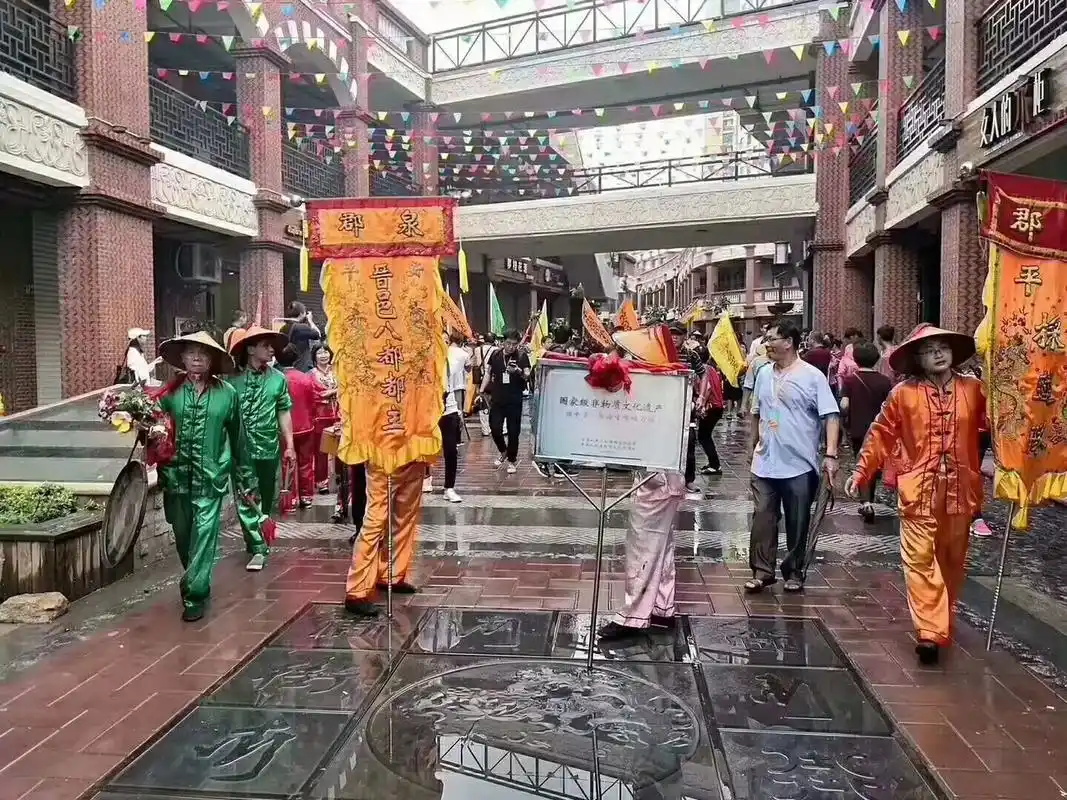
嗦啰嗹是福建泉州地区独有的端午民俗,又称 “采莲”,距今已有近千年传承史,起源于古代驱瘟逐疫的端午祓禊传统。仪式队伍由装扮成龙王、家婆、采莲女的角色与鼓乐队组成,沿着街巷挨家挨户行进,用榕树枝、艾草拂扫住户门楣,口中吟唱专属的 “嗦啰嗹” 祈福调,同时向人家赠送艾旗、榕符等吉祥信物。整个仪式保留了古越巫傩文化的遗风,节奏古朴、氛围庄重,是闽南端午文化中最具地方辨识度的活态遗产。
Suoluolian is a unique Dragon Boat Festival folk custom in Quanzhou, Fujian Province, also known as “lotus picking”. With a nearly thousand-year inheritance history, it originated from the ancient Dragon Boat Festival exorcism tradition of driving away plagues and epidemics. The ritual procession consists of performers dressed as the Dragon King, the old matriarch, lotus-picking maidens, and a drum and gong band. They march along the streets from house to house, sweeping the door lintels of residents with banyan branches and mugwort, chanting the exclusive “Suoluolian” blessing tune, and presenting auspicious tokens such as mugwort flags and banyan talismans to households. The whole ritual retains the legacy of ancient Yue shamanistic culture, with a simple rhythm and solemn atmosphere, and is the most locally recognizable living heritage of Dragon Boat Festival culture in southern Fujian.
与全国通行的赛龙舟、食粽子等端午习俗不同,嗦啰嗹的核心是入户式的驱邪祈福,更贴近端午 “祛病防疫” 的原始本义。仪式中反复吟唱的 “嗦啰嗹” 一词,学界普遍认为是梵文佛教咒语的音译遗存,在流传中融合了闽南本地民歌的曲调,是中原文化、闽越本土文化与海外佛教文化交融的产物。目前这一习俗仅在泉州晋江、南安的少数村落完整传承,属于非常稀缺的古民俗活化石。
Different from the nationwide Dragon Boat Festival customs such as dragon boat racing and eating zongzi, the core of Suoluolian is door-to-door exorcism and blessing, which is closer to the original meaning of the Dragon Boat Festival: preventing diseases and epidemics. The word “Suoluolian” repeatedly chanted in the ritual is generally believed by academics to be a transliteration remnant of Sanskrit Buddhist mantras, blended with the melody of local Minnan folk songs during its spread. It is a product of the integration of Central Plains culture, local Minyue culture and overseas Buddhist culture. At present, this custom is completely inherited only in a few villages in Jinjiang and Nan’an of Quanzhou, making it a very rare living fossil of ancient folk customs.