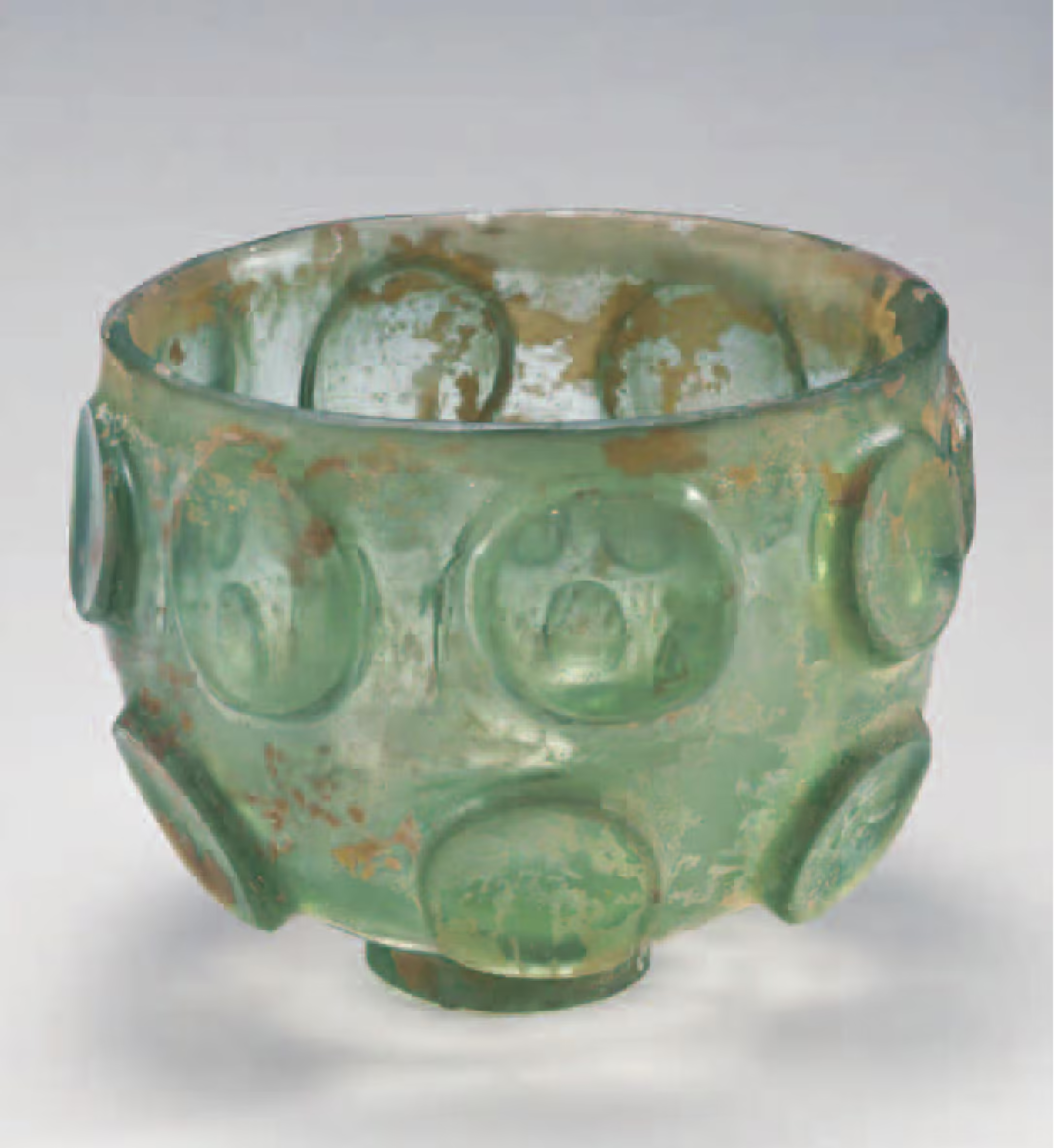
北魏萨珊风格磨花玻璃碗是南北朝时期丝绸之路中外文化交流的标志性文物,多出土于北魏皇室与贵族墓葬中,以山西大同南郊出土的一件最为精美。这件玻璃碗以钠钙玻璃制成,通体呈淡绿色,器壁极薄,外壁以磨刻工艺加工出连续的圆形凹面纹饰,光线穿过时会形成璀璨的折射效果。玻璃器在北魏时期属于珍稀舶来品,由波斯萨珊王朝经丝绸之路传入中原,价值远超金银,是贵族身份的重要象征。
The Sasanian-style cut-glass bowl of the Northern Wei Dynasty is an iconic artifact of Sino-foreign cultural exchanges along the Silk Road during the Southern and Northern Dynasties. Most are unearthed from imperial and noble tombs of the Northern Wei Dynasty, and the most exquisite one was excavated in the southern suburbs of Datong, Shanxi. Made of soda-lime glass, the bowl is pale green overall with extremely thin walls. The outer wall is carved with continuous concave circular patterns through a grinding technique, creating a brilliant refraction effect when light passes through. Glassware was a rare imported product in the Northern Wei Dynasty, introduced to the Central Plains from the Sasanian Empire of Persia via the Silk Road. Its value far exceeded gold and silver, making it an important symbol of noble status.
与中国本土传统的铅钡琉璃不同,萨珊玻璃采用吹制成型与冷加工磨花工艺,透明度与耐用性都更胜一筹,代表了当时世界玻璃工艺的最高水平。这类玻璃碗的出土,印证了北魏时期平城(今大同)作为丝绸之路东方起点的商贸地位,也反映了北方游牧民族政权对西域珍奇物品的崇尚。目前国内出土的北魏萨珊玻璃碗数量不足十件,是研究古代中西贸易与技术交流的珍贵实物。
Different from traditional local lead-barium glass in China, Sasanian glass adopts blow-molding and cold-working cut-glass techniques, with superior transparency and durability, representing the highest level of world glass craftsmanship at that time. The excavation of such glass bowls confirms the commercial status of Pingcheng (present-day Datong) as the eastern starting point of the Silk Road during the Northern Wei Dynasty, and also reflects the admiration of northern nomadic regimes for rare treasures from the Western Regions. Currently, fewer than ten Sasanian glass bowls from the Northern Wei Dynasty have been unearthed in China, making them precious physical evidence for studying ancient Sino-Western trade and technological exchanges.