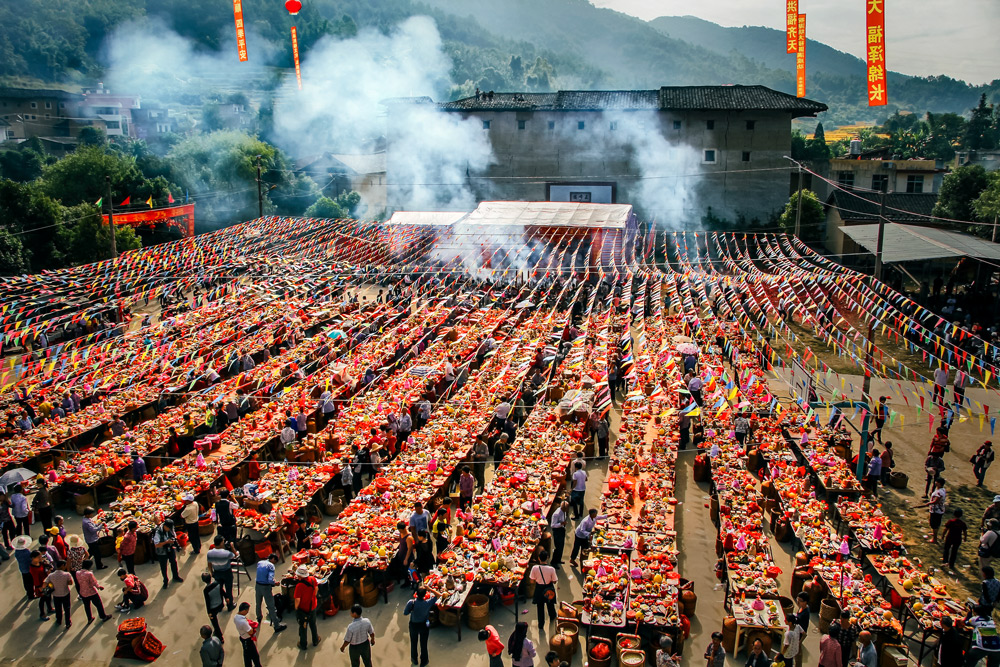
作大福是闽西客家地区独有的秋祭祈福习俗,主要流传于永定、武平等地的客家村落,不同于大众熟知的春节祭祖、中秋赏月,它是村落集体性的年度酬神大典,至今已有上千年历史。每年农历十月秋收之后,各村会轮流举办,以宗族为单位筹备祭品,搭建神棚,恭请地方保护神出巡,祈求来年风调雨顺、五谷丰登、合村平安。
The Grand Blessing Ritual is a unique autumn sacrificial blessing custom in the Hakka areas of western Fujian, mainly prevalent in Hakka villages such as Yongding and Wuping. Different from well-known traditions like Spring Festival ancestor worship and Mid-Autumn moon gazing, it is an annual collective village-wide god-paying ceremony with a history of over a thousand years. After the autumn harvest in the tenth lunar month, villages take turns to hold the event. Each clan prepares sacrifices, builds divine sheds, and invites local patron gods to parade, praying for favorable weather, abundant harvests and village peace in the coming year.
作大福的仪式流程极为讲究,包含迎神、献祭、演戏、送神等多个环节,其中最具特色的是 “百猪宴”,村民会将上百头宰杀好的整猪整齐排列在神棚前,场面壮观。仪式全程由族老主持,恪守古礼,兼具宗族凝聚与精神慰藉的功能。这项习俗仅在客家聚居的偏远村落完整传承,外界鲜有耳闻,是客家民俗文化中十分小众的活态遗存。
The ritual process of the Grand Blessing Ritual is extremely elaborate, including god welcoming, sacrifice offering, opera performance and god sending. The most distinctive part is the “Hundred Pig Feast”, where villagers arrange hundreds of slaughtered whole pigs neatly in front of the divine shed, creating a spectacular scene. The whole ceremony is presided over by clan elders in strict accordance with ancient rituals, serving both clan cohesion and spiritual comfort. This custom is completely inherited only in remote Hakka villages and is rarely known to the outside world, making it a very niche living heritage of Hakka folk culture.