
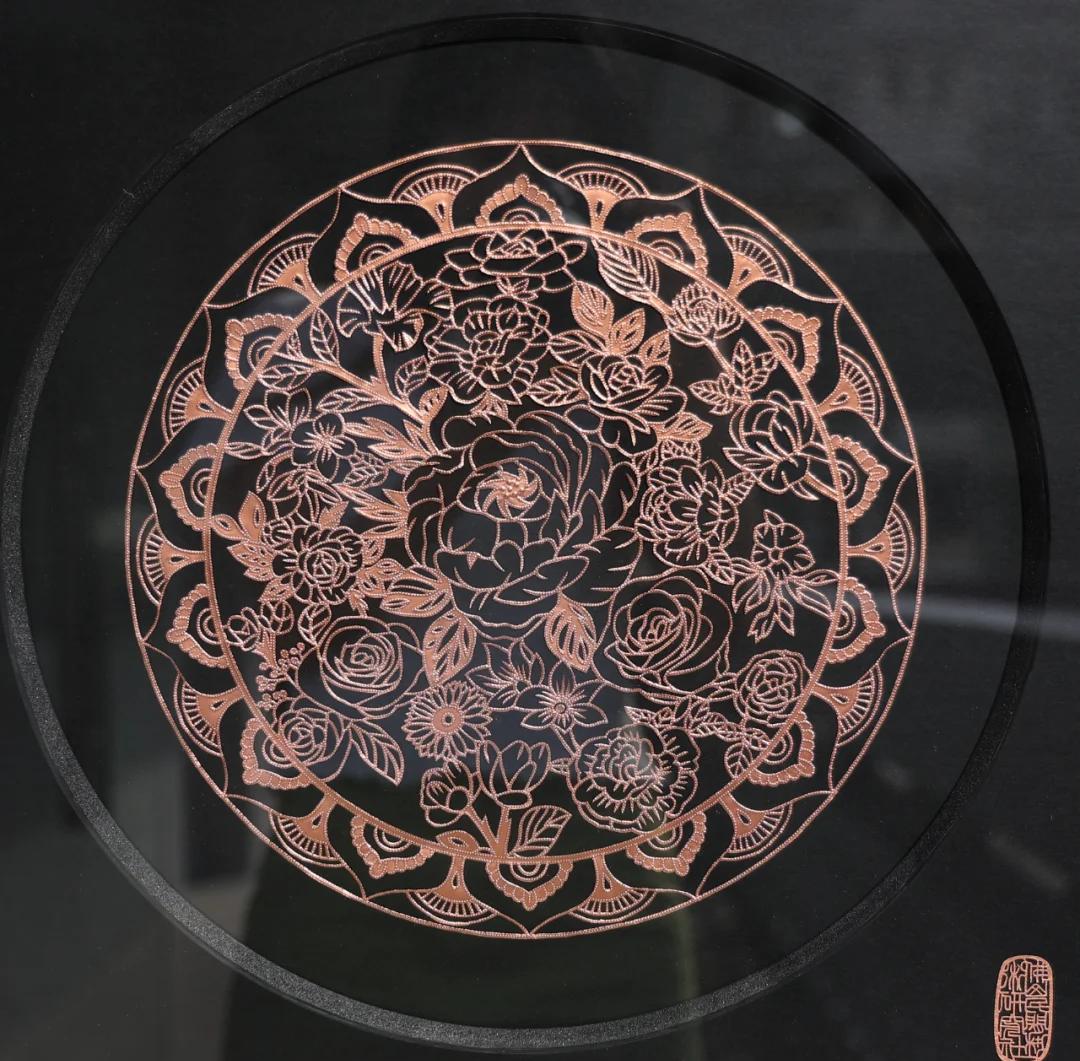
铜凿剪纸是广东佛山独有的传统民间工艺,区别于常见的红纸剪纸,它以薄铜箔为原材料,通过凿刻而非剪裁的方式制作纹样,是剪纸门类中极为小众的金属分支。这项技艺起源于明代,最初用于祭祀装饰与灯笼贴花,匠人需用特制的小圆凿、平凿等工具,在铜箔上手工敲凿出繁复的花纹,全程无需剪刀,成品自带金属光泽,华丽精致。
Copper chisel paper-cut is a unique traditional folk craft in Foshan, Guangdong. Different from common red paper cuts, it uses thin copper foil as raw material and creates patterns by chiseling instead of cutting, making it a very niche metal branch of the paper-cut category. Originating in the Ming Dynasty, it was initially used for sacrificial decoration and lantern appliqués. Craftsmen use special small round chisels and flat chisels to hammer out intricate patterns on copper foil by hand, without scissors at all. The finished products have inherent metallic luster, presenting a gorgeous and exquisite appearance.
铜凿剪纸的核心难点在于铜箔薄脆易裂,凿刻时力度必须均匀精准,稍不留神就会破损报废。传统题材多为龙凤呈祥、花鸟鱼虫、戏曲人物,线条细腻流畅,层次丰富分明。由于制作周期长、技艺难度高,如今掌握完整铜凿剪纸技艺的匠人屈指可数,作品也多作为非遗展品收藏,普通大众很少接触到这项独特的传统工艺。
The core difficulty of copper chisel paper-cut lies in the thin and brittle copper foil that cracks easily. The force during chiseling must be uniform and precise, and a slight mistake will cause damage and scrap. Traditional themes mostly include auspicious dragon and phoenix, flowers, birds, fish, insects and opera characters, with delicate smooth lines and rich distinct layers. Due to the long production cycle and high technical difficulty, there are only a handful of craftsmen who master the complete copper chisel paper-cut technique today. Most works are collected as intangible cultural heritage exhibits, and the general public rarely has access to this unique traditional craft.