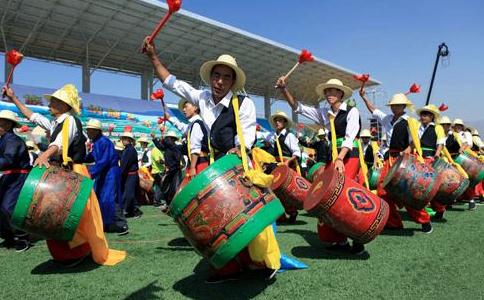
纳顿节是青海民和三川河谷地区土族独有的秋收祭祀节庆,区别于大众熟知的中秋、重阳等通用秋季节庆,它是集神灵祭祀、傩舞表演、宗族宴饮于一体的村级集体盛会,至今已有七百余年的传承历史。每年农历七月中旬至九月上旬,沿黄河谷地的土族村落按麦收顺序轮流举办,从最早开镰的村落依次向下传递,因此也被俗称为 “七月会”,核心主旨是酬谢山神、土地神与祖先庇佑,庆祝五谷丰登,祈求来年人畜兴旺、村寨平安。
The Nadun Festival is a unique autumn harvest sacrificial festival of the Tu people in the Sanchuan Valley area of Minhe, Qinghai. Different from well-known general autumn festivals such as Mid-Autumn Festival and Double Ninth Festival, it is a village-level collective event integrating god worship, Nuo dance performance and clan feasting, with a heritage history of more than 700 years. From mid-July to early September of the lunar calendar, Tu villages along the Yellow River valley hold it in turn according to the wheat harvest order, passing down from the earliest harvesting village one by one, so it is also commonly known as the “July Meeting”. Its core purpose is to thank the mountain god, land god and ancestors for their blessings, celebrate the grain harvest, and pray for the prosperity of people and livestock and village peace in the coming year.
纳顿节的仪式流程极具原始祭祀特色,开场由身着法衣的 “法拉”(萨满祭司)主持祭祀仪式,跳神祈福,随后依次上演《庄稼其》《三将》《五将》等传统傩舞剧目。舞者身着彩绘服饰,手持刀枪、旗帜与法器,动作粗犷刚健,节奏沉缓厚重,带着浓郁的远古军祭遗存气息。仪式期间家家户户蒸制大馍、酿造青稞酒招待四方亲友,全村男女老少全员参与。这项习俗仅在三川地区二十余个土族村落完整传承,外界鲜有深入记载与传播,是西北少数民族民俗中极为小众的活态文化遗产。
The ritual process of the Nadun Festival has strong primitive sacrificial characteristics. The opening ceremony is presided over by the “Fala” (shaman priest) in ritual robes, who performs the spirit dance to pray for blessings. Then traditional Nuo dance repertoires such as Zhuang Jia Qi, Three Generals and Five Generals are staged in turn. Dancers wear painted costumes, hold swords, guns, flags and ritual implements, with rough and vigorous movements and slow and solemn rhythms, carrying a strong legacy of ancient military sacrifices. During the ceremony, every family steams large buns and brews highland barley wine to entertain relatives and friends from all directions, and all men, women and children in the village participate. This custom is completely inherited only in more than 20 Tu villages in the Sanchuan area, with few in-depth records and dissemination from the outside world, making it a very niche living cultural heritage among the ethnic folk customs of northwest China.