
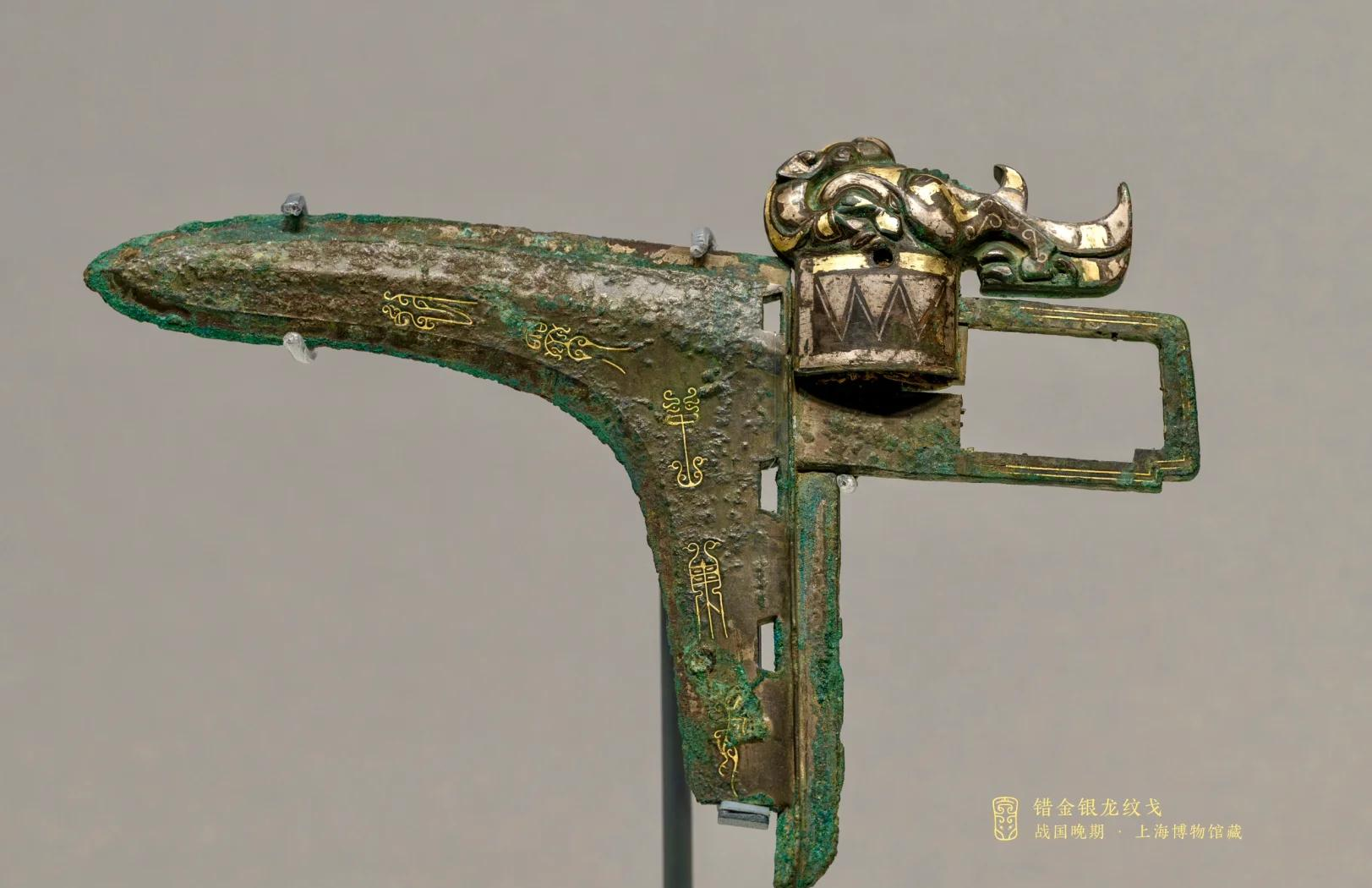
错金银青铜辕首是战国时期贵族马车的专属车舆构件,属于古代青铜车马器中极为小众的门类,区别于大众熟知的青铜礼器、兵器,它安装在马车车辕的最前端,既起到保护辕木的实用功能,也是贵族身份与车舆礼制的直观象征。现存的战国辕首多做龙首、螭首或兽首造型,张口露齿,双目圆睁,器身以错金银工艺镶嵌出繁复的卷云纹、鳞纹与几何边饰,金丝银线与青铜基底交相辉映,工艺精细入微,是战国时期金银错工艺与车马制度的核心实物见证。
The gold-silver inlaid bronze shaft head is an exclusive chariot component for noble carriages of the Warring States Period, and a very niche category of ancient bronze chariot artifacts. Different from well-known bronze ritual vessels and weapons, it is installed at the front end of the chariot shaft, serving both the practical function of protecting the shaft wood and an intuitive symbol of noble status and chariot etiquette. Most surviving Warring States shaft heads are shaped like dragon heads, chimera heads or beast heads with open mouths and round eyes. The body is inlaid with intricate cloud patterns, scale patterns and geometric borders through the gold-silver inlay process. Gold and silver threads contrast finely with the bronze base with exquisite craftsmanship, making it core physical evidence of the gold-silver inlay technique and chariot system of the Warring States Period.
这类辕首多出土于中原及楚地的诸侯王级车马坑与高等级墓葬中,通常一乘马车仅配备一件,存世数量远少于青铜鼎、壶等常见礼器。由于长期埋藏于地下,多数器物的错金银层已锈蚀剥落,完整保留纹饰的精品极为稀少。目前它们大多收藏于地方考古机构与专项文博展馆,极少在大众常设展览中露面。公众对青铜车马器的认知多停留在车马坑整体遗存,对辕首这类细分构件几乎没有了解,是青铜文物中十分冷门的细分品类。
Such shaft heads are mostly unearthed from prince-level chariot pits and high-grade tombs in the Central Plains and Chu regions. Usually, one chariot is only equipped with one piece, so the surviving quantity is far less than common bronze ritual vessels such as tripods and pots. Due to long-term underground burial, the gold-silver inlay layer of most artifacts has rusted and peeled off, and fine works with completely preserved patterns are extremely rare. At present, most of them are collected in local archaeological institutions and special cultural museums, and rarely appear in public permanent exhibitions. The public’s understanding of bronze chariot artifacts is mostly limited to the overall remains of chariot pits, with almost no knowledge of such detailed components as shaft heads, making it a very obscure sub-category of bronze cultural relics.