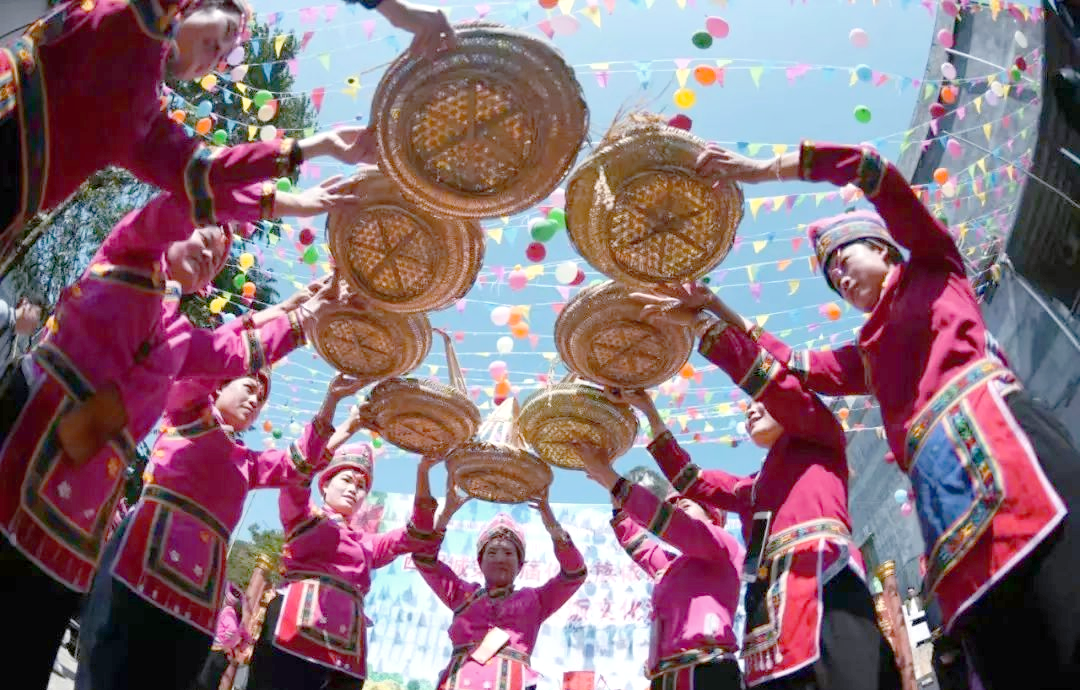
依饭节是广西罗城仫佬族独有的传统祭祀节庆,也被称为 “喜乐愿”,是仫佬族纪念先祖、答谢天地神灵的年度盛典,主要流传于桂北的仫佬族聚居村寨,每三至五年举办一次,时间多在立冬前后。区别于大众熟知的少数民族歌舞节庆,依饭节核心是宗族集体性的酬神祭祀,带着浓郁的山地农耕文化与原始信仰色彩,核心诉求是祈求来年风调雨顺、五谷丰登、六畜兴旺、合族平安。
The Yifan Festival is a unique traditional sacrificial festival of the Mulam people in Luocheng, Guangxi, also known as the “Joyful Vow”. It is an annual grand ceremony for the Mulam people to commemorate their ancestors and thank the gods of heaven and earth, mainly prevalent in Mulam villages in northern Guangxi. It is held every three to five years, usually around the Beginning of Winter. Different from well-known ethnic song and dance festivals, the core of the Yifan Festival is the collective clan god-worshipping sacrifice, with strong mountain farming culture and primitive belief characteristics. Its core appeal is to pray for favorable weather, abundant harvests, prosperous livestock and clan peace in the coming year.
依饭节的仪式流程由族内的师公主持,全程包含请圣、点牲、唱经、送神等十余个环节,仪式上师公佩戴面具,身着法衣,表演传统的祭祀舞蹈,唱腔古朴原始。祭祀结束后,全村人齐聚祠堂,共享宴饮,还有山歌对唱、斗鸟等民间活动,热闹非凡。随着现代生活方式的变迁,如今仅罗城少数偏远仫佬村寨还完整保留着依饭节的传统仪式流程,外界对其了解十分有限,是广西少数民族民俗中极为小众的活态文化遗存。
The ritual process of the Yifan Festival is presided over by the ritual master of the clan, including more than ten links such as inviting saints, offering sacrifices, chanting scriptures and sending gods. During the ceremony, the master wears masks and ritual robes, performing traditional sacrificial dances with simple and primitive singing. After the sacrifice, the whole village gathers in the ancestral hall to share a feast, along with folk activities such as antiphonal folk songs and bird fighting, creating a lively atmosphere. With the changes of modern lifestyle, only a few remote Mulam villages in Luocheng still fully retain the traditional ritual process of the Yifan Festival. The outside world has very limited understanding of it, making it a very niche living cultural heritage among the ethnic folk customs of Guangxi.