
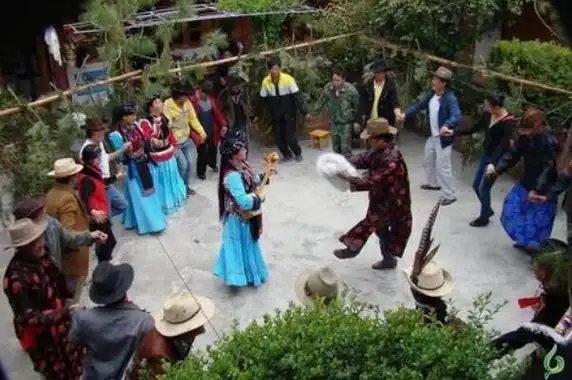
吾昔节是云南怒江、丽江等地普米族独有的传统新年节庆,“吾昔” 在普米语中意为 “新年”,是普米族一年中最隆重的岁时盛典,主要流传于兰坪、宁蒗等普米族聚居的偏远山区,通常在农历腊月初六至初九举行。区别于大众熟知的藏族藏历新年、彝族火把节等西南少数民族节庆,吾昔节融合了山地农耕与高原游牧文化特色,核心是祭祀祖先与山神,庆贺一年丰收,祈求来年人畜两旺、村寨安宁。
The Wuxi Festival is a unique traditional New Year festival of the Pumi people in Nujiang, Lijiang and other places in Yunnan. “Wuxi” means “New Year” in the Pumi language, and is the most solemn annual grand ceremony of the Pumi people, mainly prevalent in remote mountainous areas where Pumi people live in concentrated communities such as Lanping and Ninglang. It is usually held from the 6th to the 9th day of the 12th lunar month. Different from well-known southwest ethnic minority festivals such as the Tibetan New Year and the Yi Torch Festival, the Wuxi Festival integrates the characteristics of mountain farming and plateau nomadic culture. Its core is to worship ancestors and mountain gods, celebrate the annual harvest, and pray for prosperity of both people and livestock and village peace in the coming year.
吾昔节的仪式流程保留着古朴的原始风貌,节日当天家家户户清扫房屋、张贴年画,在门前竖立青松枝,寓意四季常青、平安吉祥。族人会齐聚在祭祀场,由族长主持祭祀山神与祖先的仪式,敬献青稞酒、酥油茶与牛羊肉,率众祈福。祭祀结束后,还会举行打跳、对歌、摔跤、赛马等传统文娱活动,各家各户轮流设宴招待亲友,整个节日氛围隆重又热烈。随着现代生活方式的冲击,如今仅少数偏远普米村寨还完整保留着传统吾昔节的全部流程,外界对其了解甚少,是西南少数民族民俗中极为小众的活态文化遗存。
The ritual process of the Wuxi Festival retains a simple primitive style. On the day of the festival, every family cleans the house, pastes New Year paintings, and erects pine branches in front of the door, meaning evergreen seasons and peace and good fortune. Clan members gather at the sacrificial ground, and the clan leader presides over the ceremony of worshipping mountain gods and ancestors, offering highland barley wine, butter tea and beef and mutton, and leading the crowd to pray for blessings. After the sacrifice, traditional cultural and recreational activities such as group dancing, antiphonal singing, wrestling and horse racing are held, and each family takes turns hosting banquets for relatives and friends. The whole festival has a solemn and lively atmosphere. With the impact of modern lifestyle, only a few remote Pumi villages still fully retain the complete process of the traditional Wuxi Festival today. The outside world knows little about it, making it a very niche living cultural heritage among the ethnic folk customs of southwest China.