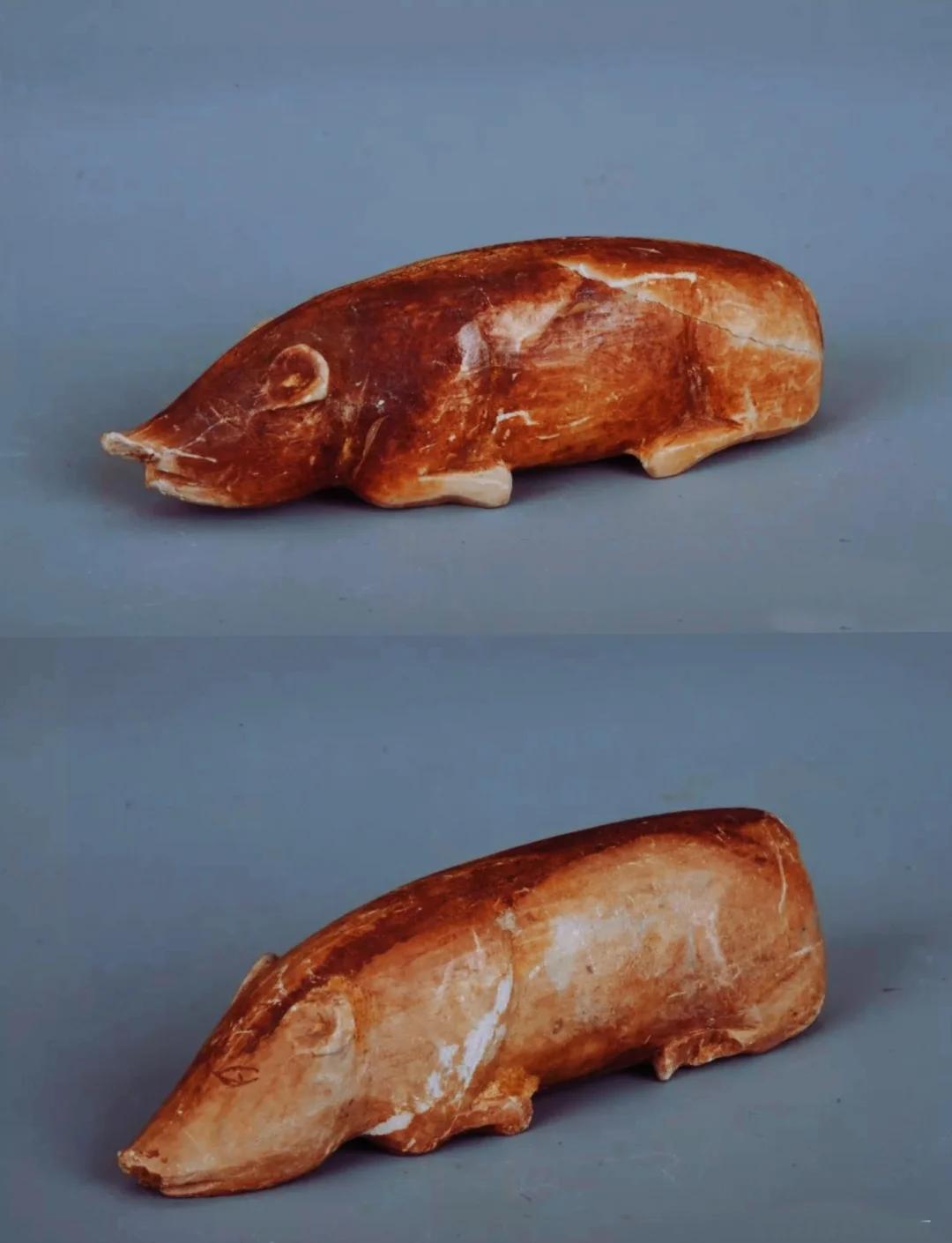
滑石猪是汉代至魏晋时期墓葬中常见的小众丧葬明器,属于古代石刻文物中极易被忽略的门类,区别于大众熟知的玉猪、金猪等贵重金属玉质葬器,它以质地细腻柔软的天然滑石为原料,经简约雕琢而成。整体造型修长伏卧,线条简练流畅,仅寥寥数刀便勾勒出猪的形态,风格质朴古拙,没有多余的装饰纹样,是汉代 “事死如事生” 丧葬观念与平民阶层葬俗的直观体现。
Talc pig figurines are common niche burial objects in tombs from the Han Dynasty to the Wei and Jin Dynasties, and a highly overlooked category among ancient stone cultural relics. Different from well-known precious metal and jade burial objects such as jade pigs and gold pigs, they are made of natural talc with fine and soft texture through simple carving. The overall shape is long and reclining with concise smooth lines. The form of a pig is outlined with only a few strokes, presenting a simple and unsophisticated style without extra decorative patterns, and serving as an intuitive embodiment of the Han Dynasty funeral concept of “treating the dead as if they were alive” and civilian funeral customs.
这类滑石猪多成对出土于中下层平民与低级官吏的墓葬中,通常置于死者双手之中,寓意手握财富、丰衣足食,同时也被赋予指引亡魂、守护墓主的丧葬功能。由于滑石材质软脆易风化,且多出自平民墓葬,长期以来不受考古重视,完整保存且轮廓清晰的精品存世量不多。目前它们大多收藏于地方博物馆与考古库房,极少在大型专题展览中亮相,公众对汉代葬器的认知多集中于王侯级的金玉葬品,对这类平民滑石明器了解极少,是古代丧葬文物中十分冷门的品类。
Such talc pig figurines are mostly unearthed in pairs from tombs of middle and lower-class civilians and low-ranking officials, usually placed in the hands of the deceased, meaning holding wealth and having ample food and clothing, and also endowed with the funeral function of guiding the soul and protecting the tomb owner. Due to the soft and brittle texture of talc that is easy to weather, and their origin from civilian tombs, they have not received archaeological attention for a long time, and there are not many well-preserved fine works with clear outlines in existence. At present, most of them are collected in local museums and archaeological warehouses, and rarely appear in large-scale special exhibitions. The public’s understanding of Han Dynasty burial objects mostly focuses on gold and jade burial products of princes and marquises, with very little knowledge of such civilian talc burial objects, making them a very obscure category of ancient funeral cultural relics.