
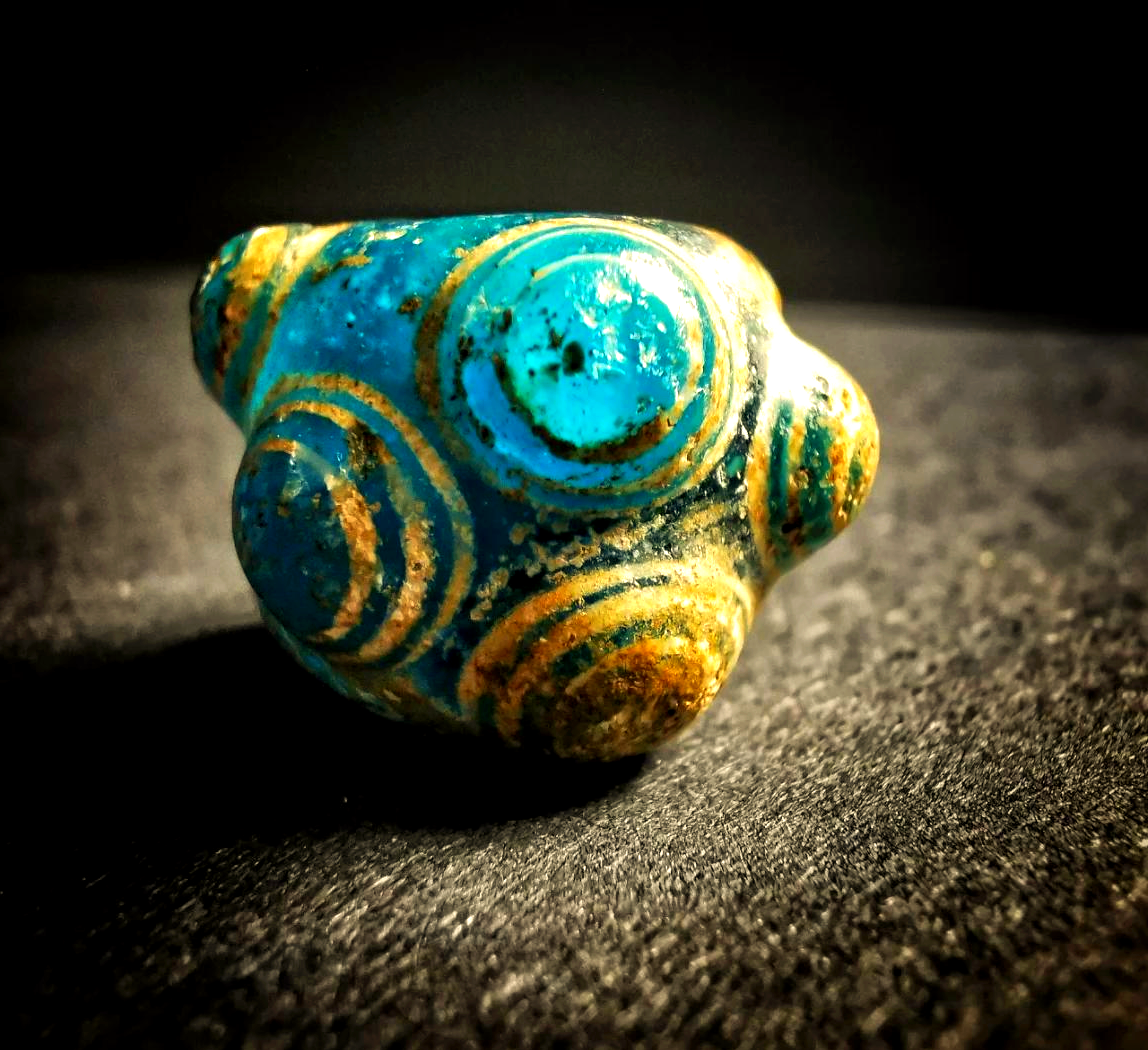
战国琉璃胎蜻蜓眼饰是战国时期贵族专属的佩饰文物,属于古代玻璃器中极为小众的早期品类,区别于大众熟知的清代琉璃器、唐宋陶瓷珠饰,它以早期铅钡玻璃为原料,采用模制与缠丝工艺制作而成。珠体呈圆形或扁圆形,表面装饰多层同心圆纹与眼状斑点,形似蜻蜓复眼,因此得名 “蜻蜓眼”。这类饰珠色彩丰富,以蓝、绿、白、褐相间为主,造型灵动别致,最初由西亚传入中原,后逐渐本土化,是战国时期中外文化交流与贵族佩饰文化的重要实物见证。
The glass-base dragonfly eye ornament of the Warring States Period was an exclusive accessory for nobles during the Warring States Period, and a very niche early category among ancient glass artifacts. Different from well-known Qing Dynasty glassware and Tang-Song ceramic bead ornaments, it is made of early lead-barium glass through molding and thread-winding techniques. The bead is round or oblate, decorated with multi-layer concentric circles and eye-shaped spots on the surface, resembling dragonfly compound eyes, hence the name “dragonfly eye”. These decorative beads are rich in color, mainly alternating blue, green, white and brown, with a vivid and unique shape. Originally introduced from West Asia to the Central Plains, they gradually became localized, serving as important physical evidence of Sino-foreign cultural exchanges and noble accessory culture during the Warring States Period.
这类蜻蜓眼饰多出土于战国中原与楚地的高等级贵族墓葬,通常作为串饰的组件佩戴于颈部或腰间,是身份地位与审美趣味的象征。由于早期琉璃质地脆薄易碎,且埋藏环境中易受土沁腐蚀,完整保存至今的战国琉璃蜻蜓眼数量稀少,纹饰清晰、色彩完好的精品更是罕见。目前它们大多收藏于地方考古机构与古代玻璃专题展馆,极少在大众常设展览中单独亮相,公众对中国古代玻璃的认知多集中于明清琉璃器物,对战国时期的早期琉璃饰珠了解极少,是古代玻璃文物中十分冷门的门类。
Such dragonfly eye ornaments are mostly unearthed from high-level noble tombs in the Central Plains and Chu regions during the Warring States Period, usually worn as components of string ornaments around the neck or waist, and are symbols of social status and aesthetic taste. Due to the brittle and fragile texture of early glass and its susceptibility to soil erosion in burial environments, very few Warring States glass dragonfly eyes have been completely preserved to this day, and fine pieces with clear patterns and intact colors are even rarer. At present, most of them are collected in local archaeological institutions and special ancient glass exhibition halls, and rarely appear alone in public permanent exhibitions. The public’s understanding of ancient Chinese glass mostly focuses on Ming and Qing glassware, with very little knowledge of early glass decorative beads from the Warring States Period, making it a very obscure category of ancient glass cultural relics.