
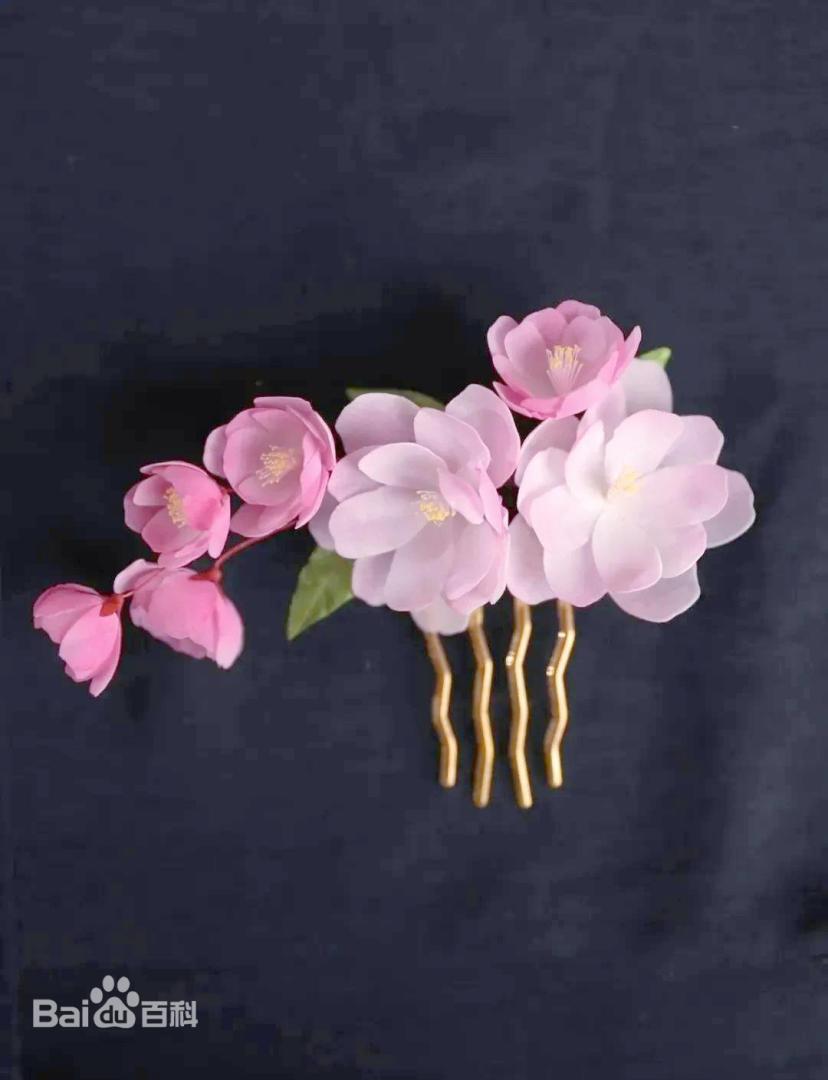
通草花是江苏扬州独有的传统仿真花卉工艺,属于中国传统工艺美术中极为小众的通草品类,区别于大众熟知的绢花、绒花、纸花,它以通脱木的茎髓为原料,经切片、裱糊、染色、塑形、组装等多道工序制作而成。成品通草花质感细腻逼真,色彩柔和自然,能够高度还原牡丹、菊花、梅花等各类花卉的形态与质感,甚至可以制作出带露水的鲜活效果,被誉为 “不谢之花”,清代时曾作为贡品进献宫廷。
Tongcao flower is a unique traditional artificial flower craft in Yangzhou, Jiangsu, and a very niche tongcao (pith paper) category among Chinese traditional arts and crafts. Different from well-known silk flowers, velvet flowers and paper flowers, it uses the pith of the rice paper plant as raw material, and is made through multiple procedures including slicing, pasting, dyeing, shaping and assembling. The finished tongcao flowers have delicate and realistic texture and soft natural colors, which can highly restore the shape and texture of various flowers such as peonies, chrysanthemums and plum blossoms, and even create a fresh dewy effect. Known as “flowers that never fade”, they were once presented to the imperial court as tributes in the Qing Dynasty.
通草花的核心技艺难点在于 “以假乱真” 的塑形与染色,匠人需根据不同花卉的生长形态精准调整通草片的厚度与弧度,染色需层层晕染,过渡自然,才能还原真实花卉的色泽与肌理。传统通草花多作为头饰、瓶插摆件与工艺装饰,题材涵盖花卉、禽鸟与山水盆景。由于原料稀缺、制作周期漫长、技艺难度极高,如今掌握完整传统通草花技艺的传承人寥寥无几,主要集中在扬州本地,属于濒临失传的小众非遗项目,普通大众对其了解十分有限。
The core technical difficulty of tongcao flowers lies in the “realistic” shaping and dyeing. Craftsmen need to precisely adjust the thickness and radian of tongcao slices according to the growth form of different flowers, and dyeing requires layer-by-layer shading with natural transition to restore the color and texture of real flowers. Traditional tongcao flowers are mostly used as head ornaments, vase ornaments and craft decorations, with themes covering flowers, birds and landscape bonsai. Due to scarce raw materials, long production cycle and extremely high technical difficulty, there are only a few inheritors who master the complete traditional tongcao flower technique today, mainly concentrated in Yangzhou local area. It is a niche intangible cultural heritage project on the verge of extinction, and the general public has very limited understanding of it.