
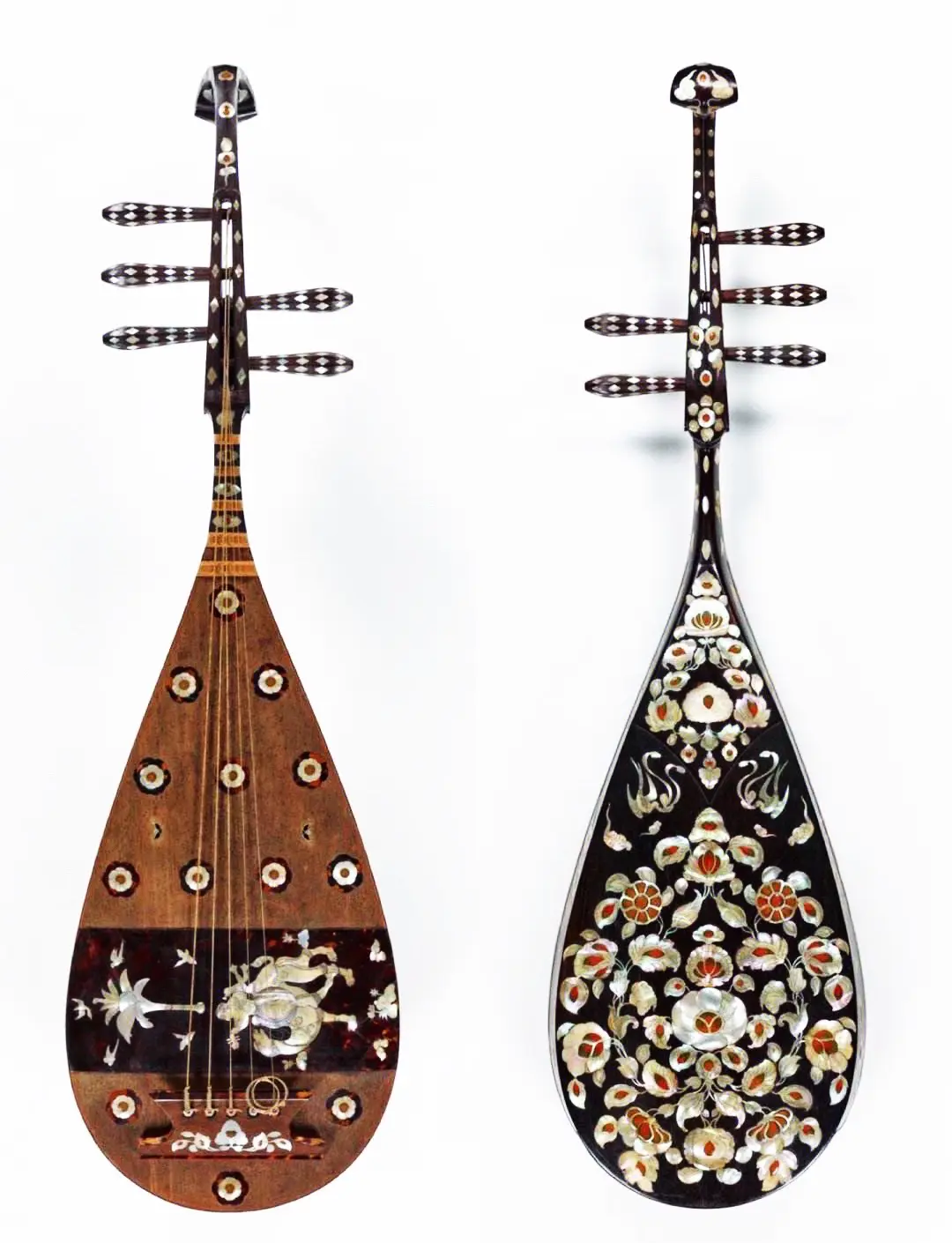
螺钿紫檀五弦琵琶是唐代传世乐器中的稀世珍品,现藏于日本奈良正仓院,是唐朝中日文化交流的重要见证。这件琵琶以名贵紫檀为琴身,通体镶嵌螺钿、琥珀、玳瑁等珍宝,琴腹正面装饰着骑骆驼弹琵琶的胡人乐师纹样,花纹繁复精巧,在光线下折射出流转的宝光,华丽至极。
The five-stringed pipa with mother-of-pearl inlay on red sandalwood is a rare treasure among surviving Tang Dynasty musical instruments. Preserved in the Shosoin Repository in Nara, Japan, it stands as an important testimony to Sino-Japanese cultural exchange in the Tang Dynasty. The instrument is crafted from precious red sandalwood, inlaid throughout with mother-of-pearl, amber and tortoiseshell. The front of the sound box features an elaborate motif of a Hu musician riding a camel and playing the pipa, with intricate patterns that shimmer with iridescent light, embodying the utmost luxury of Tang craftsmanship.
五弦琵琶起源于西域,在唐代盛极一时,宋代之后逐渐失传,如今存世的唐代五弦琵琶仅此一件,填补了音乐史与工艺史的空白。它采用的螺钿镶嵌工艺是唐代木器工艺的巅峰代表,将中亚、波斯的装饰风格与中原匠人技艺完美融合,是盛唐开放包容的文化气象的缩影。
The five-stringed pipa originated in the Western Regions and flourished in the Tang Dynasty, but gradually fell into oblivion after the Song Dynasty. This is the only surviving Tang Dynasty five-stringed pipa in the world, filling a gap in the history of music and craftsmanship. Its mother-of-pearl inlay technique represents the pinnacle of Tang Dynasty woodworking, perfectly blending Central Asian and Persian decorative styles with Central Chinese artisan skills, and serving as a microcosm of the open, inclusive cultural ethos of the High Tang era.