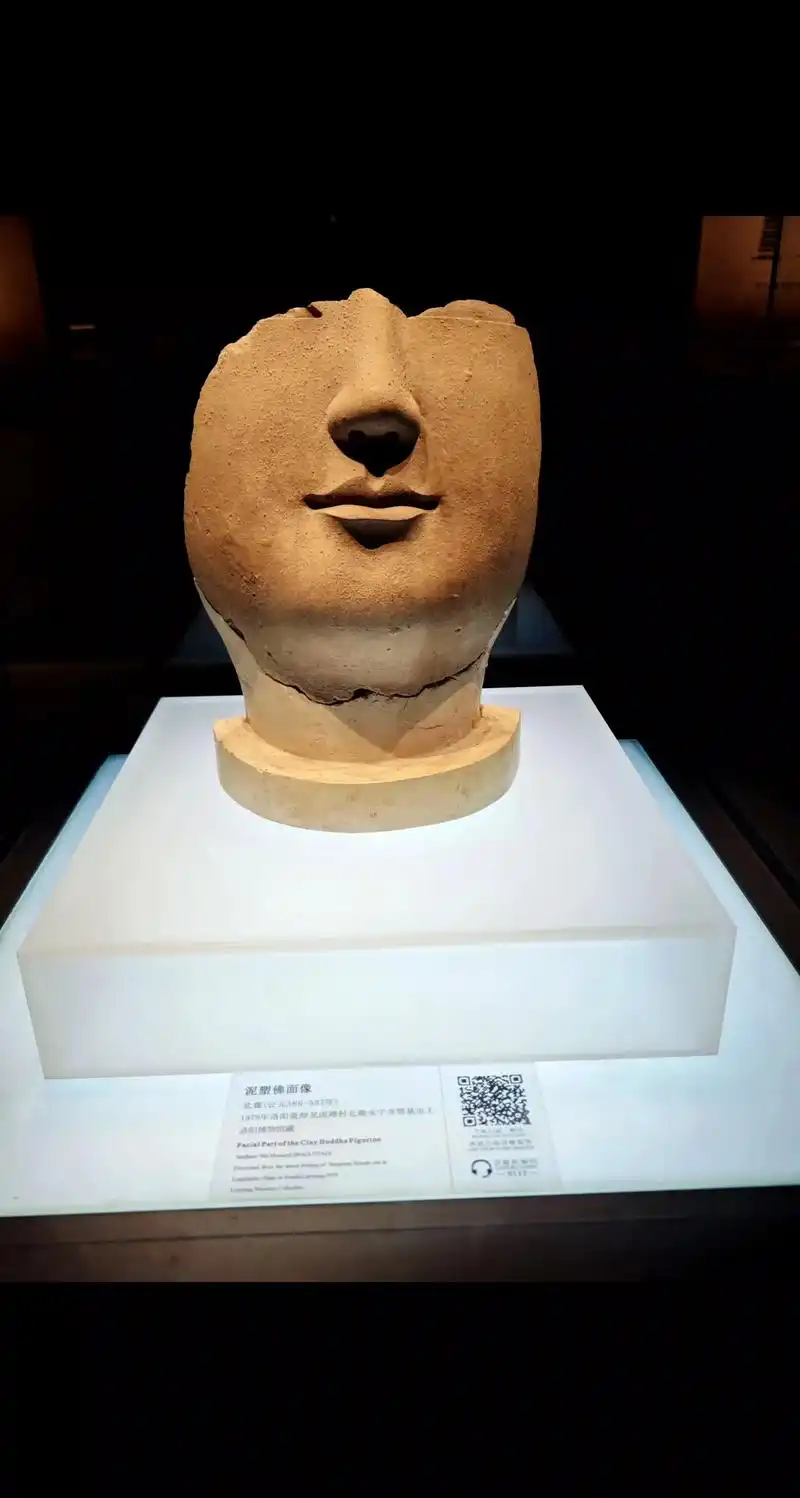
永宁寺塔基泥塑人面像出土于河南洛阳永宁寺塔遗址,是北魏晚期佛教造像艺术的巅峰之作,现藏于中国社会科学院考古研究所。永宁寺曾是北魏皇家寺院,塔高九层,是当时世界最高的木构建筑,后毁于大火,这批泥塑便是塔内壁龛中的供养造像残件,多数残缺不全,却依旧难掩极致的工艺水准。
The clay sculpted human faces excavated from the pagoda foundation of Yongning Temple in Luoyang, Henan, represent the pinnacle of Buddhist sculptural art in the late Northern Wei Dynasty, and are now preserved in the Institute of Archaeology, Chinese Academy of Social Sciences. Yongning Temple was once an imperial Buddhist temple of the Northern Wei, with a nine-story wooden pagoda that was the tallest wooden structure in the world at the time. After the temple was destroyed by fire, these clay sculptures—originally decorative figures in the pagoda’s wall niches—were left in fragments, yet their extraordinary craftsmanship remains fully evident.
与同时期石窟造像的雄浑厚重不同,永宁寺泥塑以细腻柔美著称。人面像面庞修长,眉目舒展,嘴角带着若有若无的微笑,既有佛教造像的庄严慈悲,又饱含世俗人间的温婉气韵。这批造像原本色彩艳丽,历经千年火焚与水土侵蚀,如今只剩素胎泥色,却反而成就了一种残缺而沉静的东方美学,被誉为 “东方的蒙娜丽莎”。
Different from the robust, imposing grotto statues of the same era, Yongning Temple’s clay sculptures are celebrated for their delicacy and soft grace. The faces feature slender contours, smooth brows and eyes, and a faint, subtle smile, blending the solemn compassion of Buddhist iconography with the gentle warmth of secular human expression. Made of painted clay, these sculptures were once vividly colored. After a millennium of fire damage and erosion, only the plain clay body remains, yet this has given rise to a unique aesthetic of fragmented tranquility, earning them the reputation of the “Mona Lisa of the East.”