赶秋节是湘西苗族最具代表性的传统节庆之一,于每年立秋之日举行,2014 年入选国家级非物质文化遗产名录,后作为二十四节气扩展项目列入联合国教科文组织非遗名录。这一习俗起源于苗族远古的祭祀与丰收庆典,相传已有数千年历史,最初是先民为庆祝战胜灾厄、感恩五谷神而举办,如今已发展为集祭祀、歌舞、社交、商贸于一体的盛大民俗活动。
The Ganqiu Festival is one of the most representative traditional festivals of the Miao people in western Hunan, held every year on the day of Start of Autumn. It was inscribed on the National Intangible Cultural Heritage List in 2014, and later included in the UNESCO Intangible Cultural Heritage List as an extension of the Twenty-Four Solar Terms. Originating from ancient Miao sacrificial and harvest celebrations with a history of thousands of years, it was first held by ancestors to celebrate victory over disasters and give thanks to the grain god. Today, it has evolved into a grand folk event integrating sacrifice, singing and dancing, social interaction and trade.
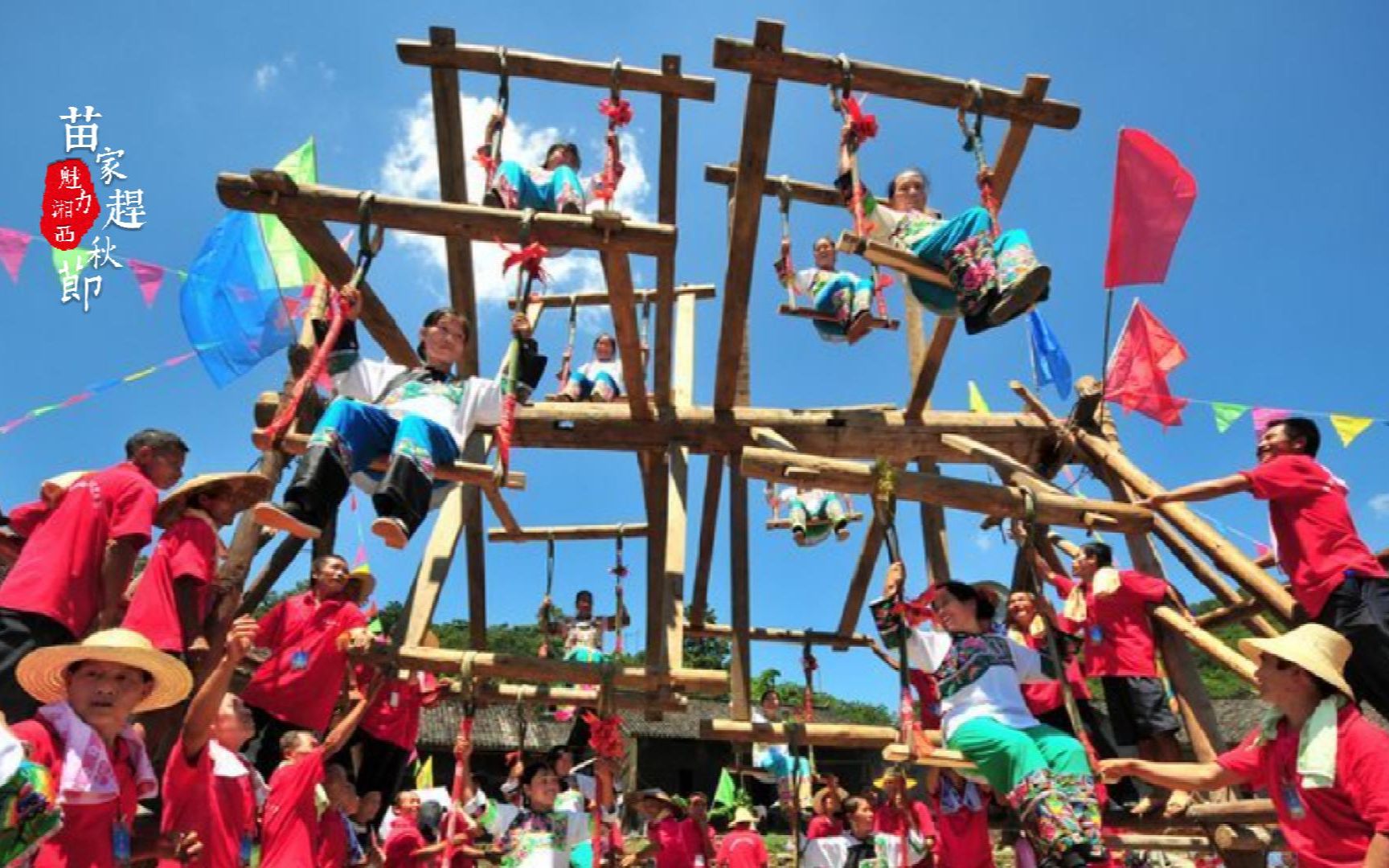
节日当天,十里八乡的苗族群众身着盛装汇聚秋场,活动分为迎秋、祭秋、闹秋三个环节。最具特色的 “八人秋” 是巨型纺车式秋千,八人同坐飞速旋转,歌声与欢呼声响彻山野;同时还有苗鼓、接龙舞、上刀梯等传统表演,青年男女则通过对歌、赶边边场寻觅伴侣。赶秋节不仅是苗族庆祝丰收的盛典,也是传承民族记忆、维系社群情感的文化纽带。
On the day of the festival, Miao people from all surrounding villages gather at the autumn ground in splendid attire. The celebration consists of three parts: welcoming autumn, offering sacrifice to autumn, and celebrating autumn. The most iconic activity is the “eight-person autumn”, a giant spinning wheel swing where eight people sit and rotate rapidly, with songs and cheers echoing across the mountains. There are also traditional performances such as Miao drum dancing, dragon welcoming dance and knife ladder climbing. Young men and women find partners through antiphonal singing and social gatherings. The Ganqiu Festival is not only a grand celebration of harvest for the Miao people, but also a cultural bond that passes down ethnic memory and sustains community emotions.