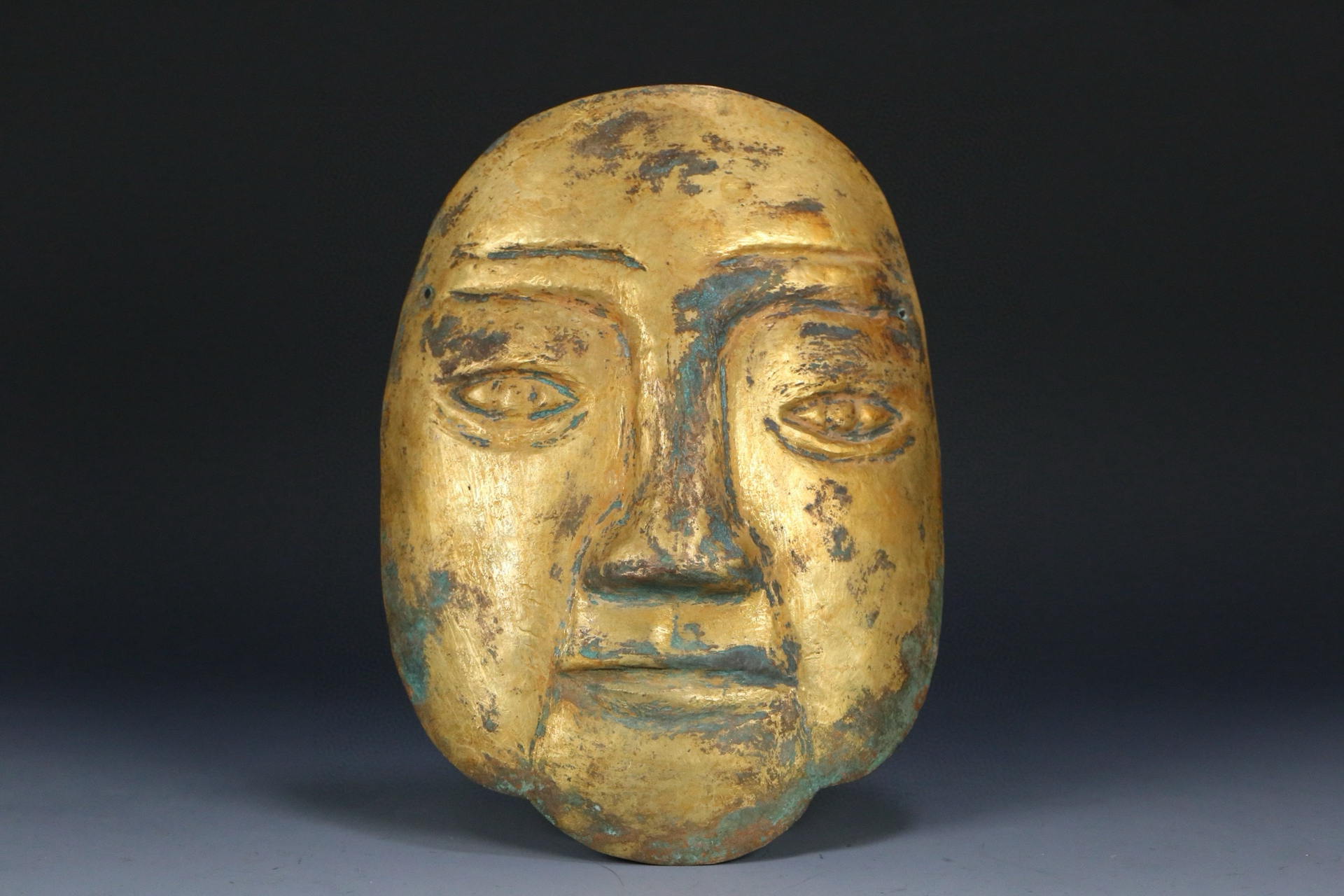
辽代鎏金铜面具是契丹贵族丧葬制度的特有器物,通常覆盖于逝者面部,与金属网络配套使用,象征墓主人的身份与灵魂的永恒。这类面具多以青铜锻打成型,表面鎏金,五官刻画写实柔和,兼具游牧民族的粗犷与中原汉地的审美特征。目前出土的辽代面具数量稀少,完整的鎏金制品更是凤毛麟角,多藏于内蒙古、辽宁等地的地方博物馆,是研究契丹丧葬文化与金属工艺的核心物证。
The gilded bronze funeral mask is a unique artifact of the Khitan noble burial system in the Liao Dynasty. It was usually placed over the face of the deceased, paired with a metal net shroud, symbolizing the identity of the tomb owner and the eternity of the soul. Most of these masks are forged from bronze with gilded surfaces, featuring realistic and gentle facial features that blend the boldness of nomadic peoples with the aesthetic tastes of the Central Plains. Few complete gilded specimens have been unearthed, and most are housed in local museums in Inner Mongolia and Liaoning, serving as core evidence for studying Khitan funeral culture and metalworking techniques.
与古埃及木乃伊面具的宗教神性不同,辽代面具更侧重 “形像归位” 的丧葬观念 —— 契丹人相信保持面容完整可让灵魂有所依附,同时也受佛教 “金身” 思想的影响。面具的尺寸与五官细节往往严格依照墓主本人生前样貌定制,贵族男性面具多棱角分明,女性面具则圆润温婉,甚至会刻出精细的发饰纹路,是辽代社会等级与审美取向的直观缩影。
Unlike the religious divinity of ancient Egyptian mummy masks, Liao Dynasty masks focused more on the burial concept of “keeping the form intact”. The Khitan people believed that preserving a complete face allowed the soul a place to reside, and this practice was also influenced by the Buddhist idea of a “golden body”. The size and facial details of each mask were custom-made to match the tomb owner’s appearance in life: male noble masks often have sharp, angular features, while female ones are round and gentle, even engraved with delicate hair ornament patterns, serving as a vivid reflection of social hierarchy and aesthetic trends in the Liao Dynasty.