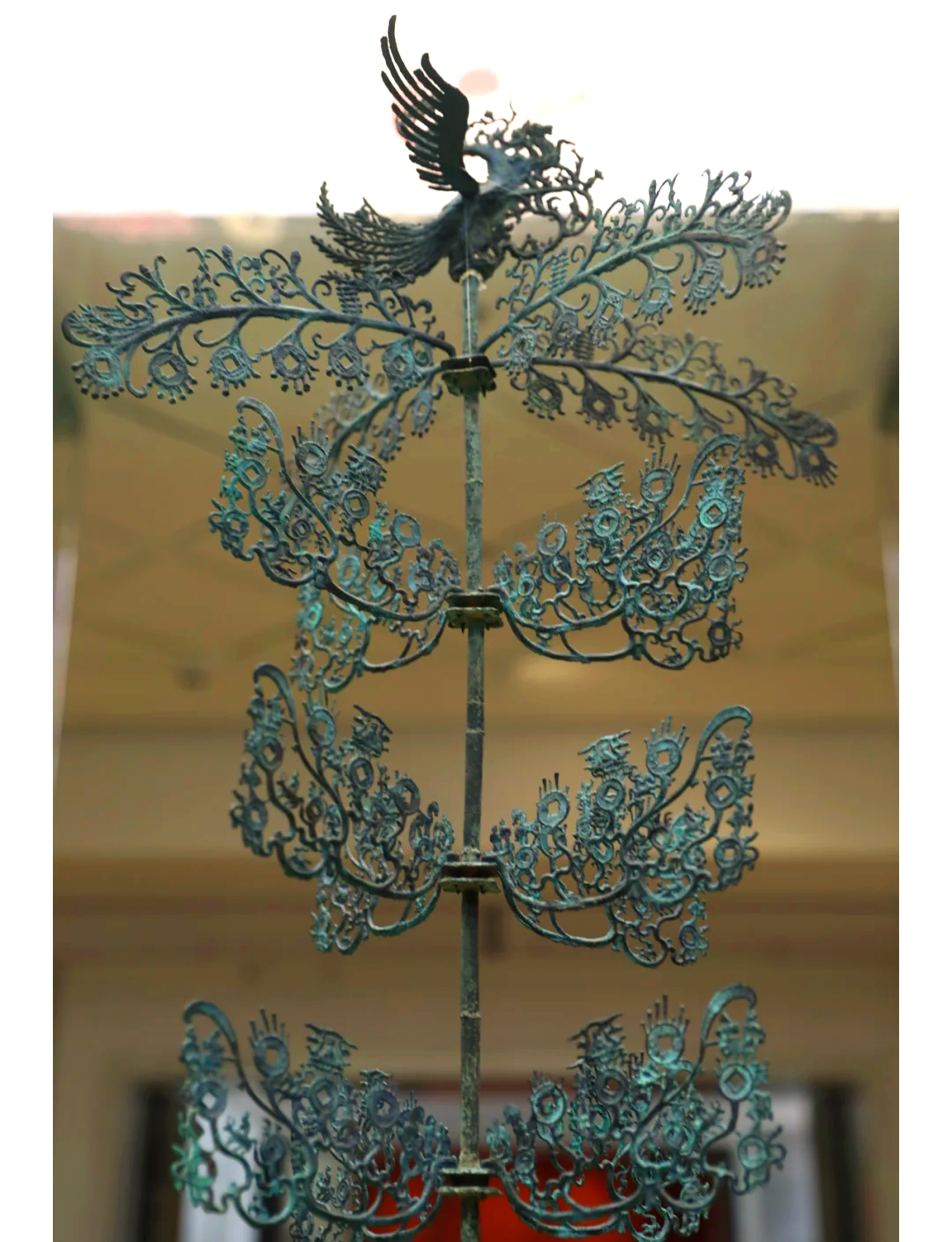
东汉青铜摇钱树是中国西南地区独有的丧葬明器,主要出土于四川、重庆、云南等地的东汉墓葬中,因树体挂满方孔圆钱、状如摇钱之树而得名。完整的摇钱树由陶质或石质树座与青铜树体两部分组成,树座多塑成神兽或山峦造型,青铜树干分层伸出枝叶,叶片以铜钱为基本形,上面模印西王母、羽人、九尾狐、蟾蜍、乐舞百戏等神仙方术与世俗生活图像,顶层往往立有一只展翅的凤鸟。整株树通高通常在 1 至 2 米之间,铸造工艺繁复,是汉代西南地区独有的艺术瑰宝。
The Eastern Han Dynasty bronze money tree is a unique funerary object found exclusively in southwestern China, primarily unearthed from Eastern Han tombs in Sichuan, Chongqing and Yunnan. It gets its name because the tree is covered with square-holed round coins, resembling a tree that sheds money when shaken. A complete money tree consists of a pottery or stone base and a bronze tree body. The base is often molded into mythical beasts or mountain shapes, while the bronze trunk extends layered branches and leaves. The leaves take copper coins as their basic form, imprinted with images of the Queen Mother of the West, winged immortals, nine-tailed foxes, toads, and musical and acrobatic performances—blending immortal mysticism with secular life. A spreading phoenix bird usually perches at the top. The entire tree typically stands 1 to 2 meters tall, with complex casting techniques, making it a unique artistic treasure of the Han Dynasty in southwestern China.
摇钱树的文化内涵远超 “财富” 二字,它是汉代人 “事死如事生” 观念与神仙信仰结合的产物。树上的西王母与羽人图像,寄托了墓主人死后升仙、长生不死的愿望;挂满枝头的铜钱,则象征在冥界仍能享有富足的物质生活。与中原地区常见的陶仓、陶楼等明器不同,摇钱树是西南地区本土文化 —— 尤其是古蜀人太阳神树崇拜 —— 与中原汉文化交融的结晶,其树形可追溯到三星堆青铜神树的古老传统。目前全国出土的完整东汉青铜摇钱树不足三十株,是研究汉代西南地区丧葬观念、神话体系与青铜工艺的一级文物。
The cultural connotation of the money tree goes far beyond the concept of “wealth”. It is a product of the Han Dynasty belief in “treating the dead as if alive” combined with immortal worship. The images of the Queen Mother of the West and winged immortals on the tree express the tomb owner’s wish for ascension to immortality and eternal life after death; the coins covering the branches symbolize continued material prosperity in the underworld. Unlike common funerary objects in the Central Plains such as pottery granaries and buildings, the money tree is a crystallization of the integration of southwestern local culture—especially the ancient Shu people’s worship of the divine sun tree—with Central Plains Han culture. Its tree form can be traced back to the ancient tradition of the Sanxingdui bronze divine tree. Currently, fewer than thirty complete Eastern Han bronze money trees have been unearthed nationwide, making them first-class cultural relics for studying Han Dynasty funeral beliefs, mythological systems and bronze craftsmanship in southwestern China.