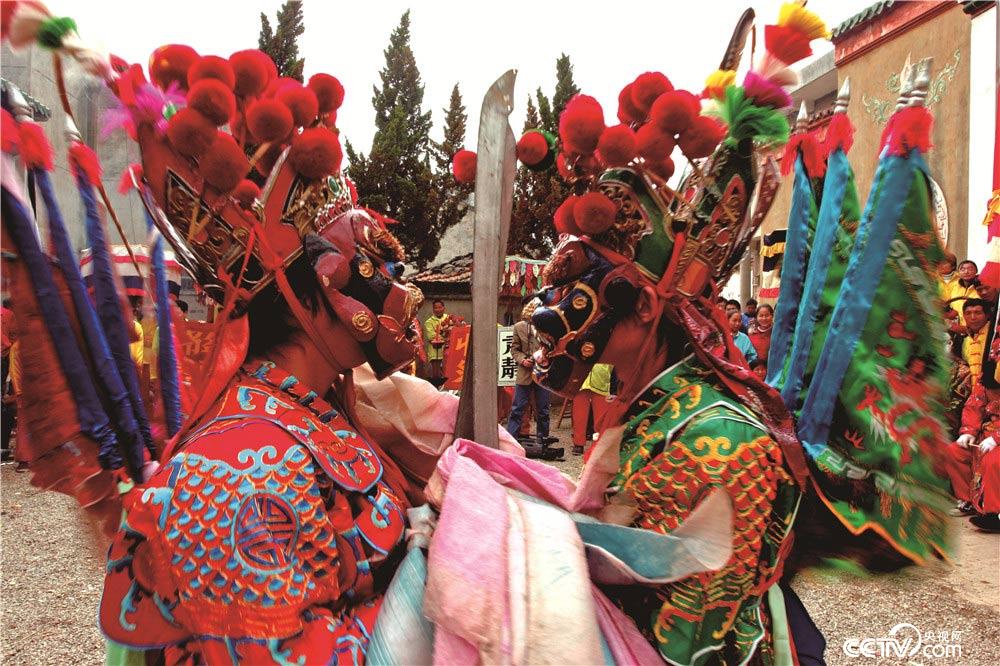
跳幡神是盛行于江苏常州武进地区的古老傩舞民俗,始于明代万历年间,是江南地区极具代表性的小众祭祀舞蹈,区别于北方盛大的傩戏表演,它风格质朴粗犷、仪式庄重古朴,仅在新春祭祀、祈福庆典中上演,传播范围狭小,知晓人数极少,是江南稀缺的原生态傩文化遗存。
The God-Flag Dance is an ancient Nuo dance folk custom prevalent in Wujin, Changzhou, Jiangsu, originating in the Wanli period of the Ming Dynasty. It is a representative niche sacrificial dance in the Jiangnan region. Different from grand northern Nuo opera performances, it features simple and bold styles as well as solemn and ancient rituals. Performed only in Spring Festival sacrifices and blessing celebrations, it has a narrow spread range and few audiences, serving as a rare original ecological Nuo cultural relic in Jiangnan.
整套仪式分为起傩、行傩、演傩、圆傩四个环节,舞者身着传统祭祀服饰,手持彩色幡旗,配合古朴的鼓乐节奏起舞,动作雄浑有力、套路规整,兼具祭祀仪式感与舞蹈观赏性。古人以此祭祀神明、驱疫避灾、祈求风调雨顺、村落安宁,历经数百年口传身授,完整保留了明代江南民间傩舞的原始形态,是极具研究与保护价值的小众非遗民俗。
The complete ritual consists of four parts: initiating Nuo, parading Nuo, performing Nuo and concluding Nuo. Dancers wear traditional sacrificial costumes, hold colored god flags, and dance to the rhythm of ancient drum music with powerful and standardized movements, combining sacrificial solemnity and dance appreciation. Ancient people performed this dance to worship gods, dispel plagues and disasters, and pray for favorable weather and village peace. Passed down orally and manually for hundreds of years, it completely retains the original form of Jiangnan folk Nuo dance in the Ming Dynasty, being a niche intangible cultural folk custom with great research and protection value.