
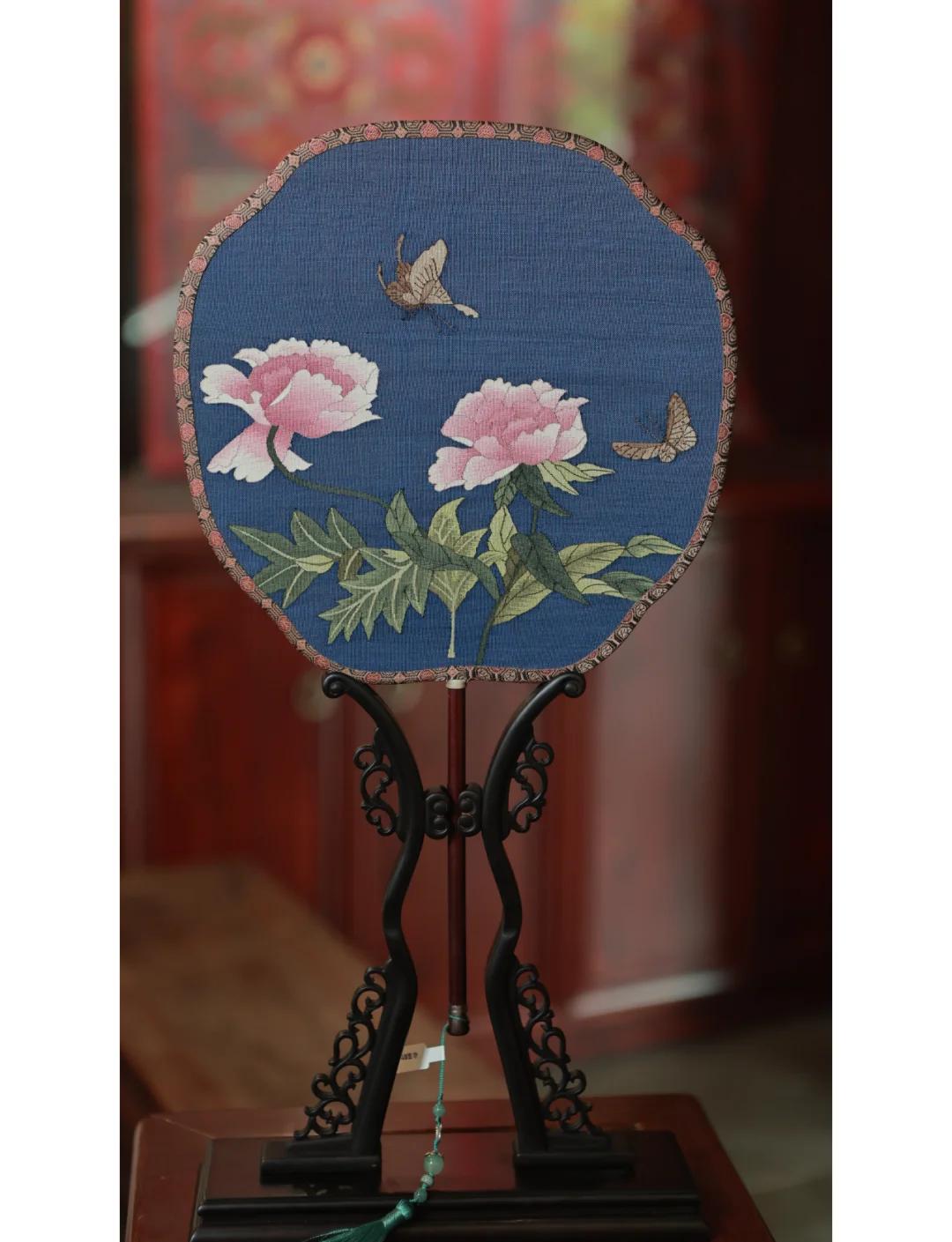
缂丝团扇是宋代兴起、明清盛行的高端传统手工器物,区别于普通竹骨绢布团扇,它以“通经断纬”的缂丝技艺织造扇面,是古代宫廷御用的小众雅致文玩,极少流于民间,如今大众认知度远低于苏绣、湘绣等传统工艺。缂丝工艺素有“一寸缂丝一寸金”的美誉,是中国丝织工艺中最繁复、最珍贵的品类之一,专用于制作高端扇面、书画装裱等精细器物。
The Kesi round fan is a high-end traditional handmade artifact that emerged in the Song Dynasty and flourished in the Ming and Qing dynasties. Different from ordinary bamboo-framed silk round fans, its fan surface is woven with the intricate Kesi technique of “interwoven warp and broken weft”. It was an elegant and exclusive royal ornament in ancient times, rarely circulating among the people, and is far less known to the public than traditional crafts such as Suzhou embroidery and Hunan embroidery. Known for the reputation of “one inch of Kesi equals one inch of gold”, Kesi craftsmanship is one of the most complicated and precious silk weaving techniques in China, specially used for making high-end fan surfaces, painting and calligraphy mounting and other delicate artifacts.
一把精品缂丝团扇需历经数十道手工工序,匠人纯手工穿梭丝线,无需底稿便可织就山水花鸟、人物纹样,花纹正反两面一模一样,无拼接痕迹、无丝线接头,质感通透细腻。古时多为闺阁女子、文人雅士随身配饰,兼具纳凉、赏玩、礼仪多重价值,如今纯古法缂丝团扇匠人稀缺,是兼具审美与文物价值的小众传统工艺珍品。
A high-quality Kesi round fan requires dozens of manual processes. Craftsmen shuttle silk threads purely by hand and weave landscapes, flowers, birds and figure patterns without drafts. The patterns on the front and back are identical without splicing traces or thread joints, presenting a transparent and delicate texture. In ancient times, it was mostly a portable accessory for ladies in boudoirs and literati, with multiple values of cooling, appreciation and etiquette. Nowadays, craftsmen who master pure ancient Kesi fan-making techniques are scarce, making it a niche traditional craft treasure with both aesthetic and cultural relic value.