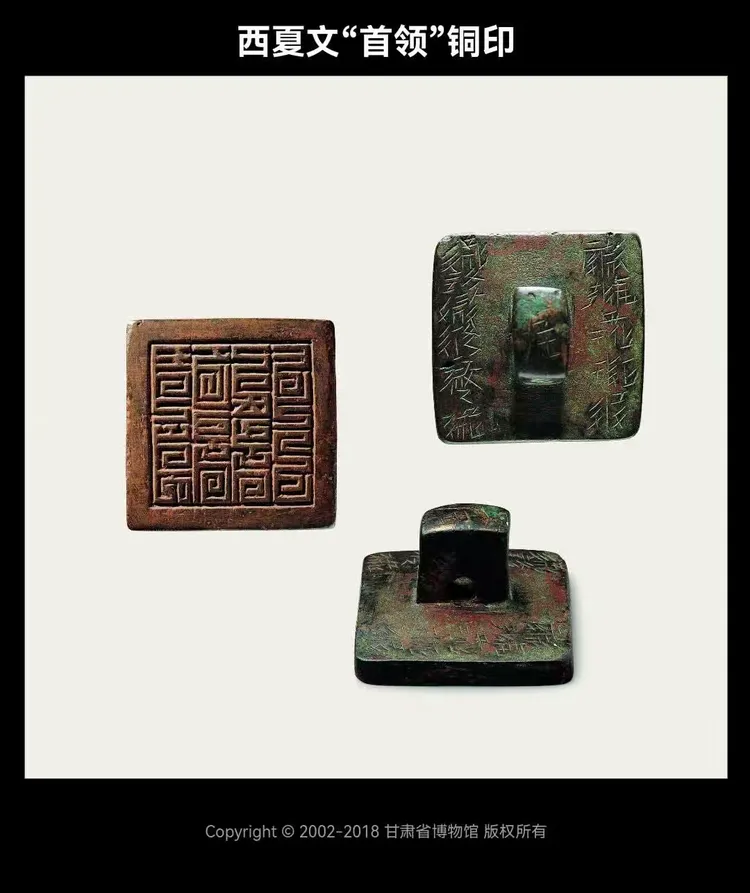
西夏鎏金西夏文首领印是西夏王朝部族武官体系的专属印信,属于中国古代玺印文物中极为小众的民族政权品类。区别于中原王朝常见的汉文铜印、玉印,它以青铜为胎,通体鎏金,印文采用专属的西夏文篆书,字形方整朴拙,笔画堆叠均匀饱满,是西夏文字制度与金属冶铸工艺结合的核心实物见证。这类印多为正方形制式,印背常阴刻铸造年号与掌印官职,印顶设穿孔钮便于随身佩戴,整体风格雄浑厚重,带着鲜明的党项游牧民族政权特色。
The Xixia gilded bronze seal with Xixia script for tribal chiefs is an exclusive seal for the military officer system of the Xixia Dynasty tribal system, and a very niche category of ethnic regime relics among ancient Chinese seal artifacts. Different from common Chinese-script bronze and jade seals of Central Plains dynasties, it takes bronze as the base and is fully gilded. The seal characters adopt the exclusive Xixia seal script, with square and simple shapes and evenly stacked full strokes, serving as core physical evidence of the combination of the Xixia writing system and metal casting technology. Most of these seals follow the square standard. The back of the seal is often engraved with the casting reign title and the official position of the seal holder, and a perforated knob on the top is convenient for carrying. The overall style is vigorous and solid, with distinct characteristics of the Tangut nomadic regime.
这类首领印多出土于宁夏、甘肃、内蒙古等西夏故地的城址与墓葬中,墓主多为西夏部族首领与中基层武官,是研究西夏军事建制与基层管理的重要实物资料。由于西夏存世官方文献极少,且鎏金层易受风沙侵蚀剥落,完整保存至今的鎏金西夏文官印数量极为稀缺,国内公立馆藏的完整鎏金品不足二十方。它们大多收藏于西北地方考古库房与西夏专题展馆,极少在全国性综合展览中亮相,大众对其认知度极低,是中国古代玺印体系中十分冷门的民族文物门类。
These chief seals are mostly unearthed from city sites and tombs in former Xixia territories such as Ningxia, Gansu and Inner Mongolia. Their owners were mostly Xixia tribal leaders and middle and low-ranking military officers, making them important physical materials for studying the Xixia military organization and grassroots administration. Due to the scarcity of surviving official Xixia documents and the easy erosion and peeling of the gilded layer by wind and sand, very few gilded Xixia official seals have been completely preserved to this day, with fewer than twenty complete gilded pieces in domestic public collections. Most of them are stored in local archaeological warehouses and Xixia-themed exhibition halls in northwest China, and rarely appear in national comprehensive exhibitions. The public has very low awareness of them, making them a very obscure ethnic cultural relic category in the ancient Chinese seal system.