
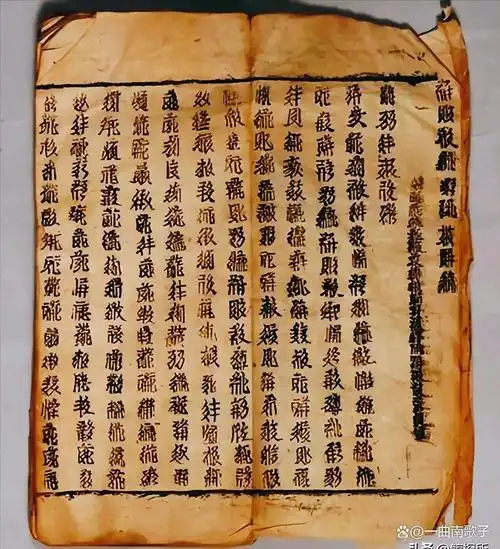
西夏文木活字佛经是西夏时期印刷的小众文献文物,属于中国古代印刷史与古籍文物中极为冷僻的民族品类,区别于大众熟知的宋代汉文雕版佛经、敦煌手抄经卷,它以党项西夏文为文字载体,采用中原传入的木活字印刷技术印制而成。现存的西夏文木活字佛经多为佛教大乘经典,版式规整疏朗,字体方正朴拙,字行间的活字拼接痕迹清晰可见,是中国古代木活字印刷技术的重要实物佐证,也填补了西夏文字与佛教传播研究的实物空白。
Xixia wooden movable-type Buddhist sutras are niche documentary cultural relics printed during the Xixia Dynasty, and a highly obscure ethnic category among ancient Chinese printing history and ancient book cultural relics. Different from well-known Song Dynasty Chinese woodblock Buddhist sutras and Dunhuang handwritten scripture scrolls, they use the Tangut Xixia script as the text carrier and are printed with wooden movable-type printing technology introduced from the Central Plains. Most surviving Xixia wooden movable-type Buddhist sutras are Mahayana Buddhist classics, with neat and spacious layout, square and simple characters, and clear movable-type splicing traces between lines. They serve as important physical evidence of ancient Chinese wooden movable-type printing technology, and also fill the physical blank in the research of Xixia script and Buddhist communication.
这类佛经多出土于宁夏、甘肃等地的西夏古塔与寺院遗址的窖藏之中,多为西夏民间寺院与信众出资刊印,流传范围仅限西夏境内,存世数量极为稀少,且多为残卷散页。由于西夏文字失传数百年,且木活字印刷实物存世极少,这批佛经长期以来未被识读与重视。目前它们大多收藏于宁夏、甘肃等地的地方文博机构与西夏研究机构,极少在大众古籍展览中展出,公众对其认知度极低,是中国古代印刷文物中十分冷门的民族文献品类。
Such Buddhist sutras are mostly unearthed from hoards in Xixia ancient pagodas and temple sites in Ningxia, Gansu and other places. Most were funded and printed by folk temples and believers in Xixia, with a circulation scope limited to the Xixia territory, and the surviving quantity is extremely scarce, mostly being incomplete scrolls and scattered pages. Due to the loss of the Xixia script for hundreds of years and the scarcity of surviving wooden movable-type printing objects, these Buddhist sutras have not been recognized and valued for a long time. At present, most of them are collected in local cultural and museum institutions and Xixia research institutions in Ningxia, Gansu and other places, and rarely exhibited in public ancient book exhibitions. The public has very low awareness of them, making them a very obscure ethnic documentary category among ancient Chinese printing cultural relics.